Programme governance · Product direction · Cross-functional delivery · Technology orchestration.
02 · Case Study · EUTELSAT
Redesign a stalledmulti-country platform.
EUTELSAT had a B2B retailer portal refactoring initiative that had failed after two years of work and then remained on hold for roughly one year. Mandated to lead the end-to-end recovery and redesign of the programme, I established programme-level governance across product direction, business stakeholders, UX/UI, engineering, APIs, CRM and architecture, transforming a fragmented multi-portal, multi-country landscape into one consolidated B2B platform.
Recover the mandate · simplify the platform · align the teams · deliver end to end.
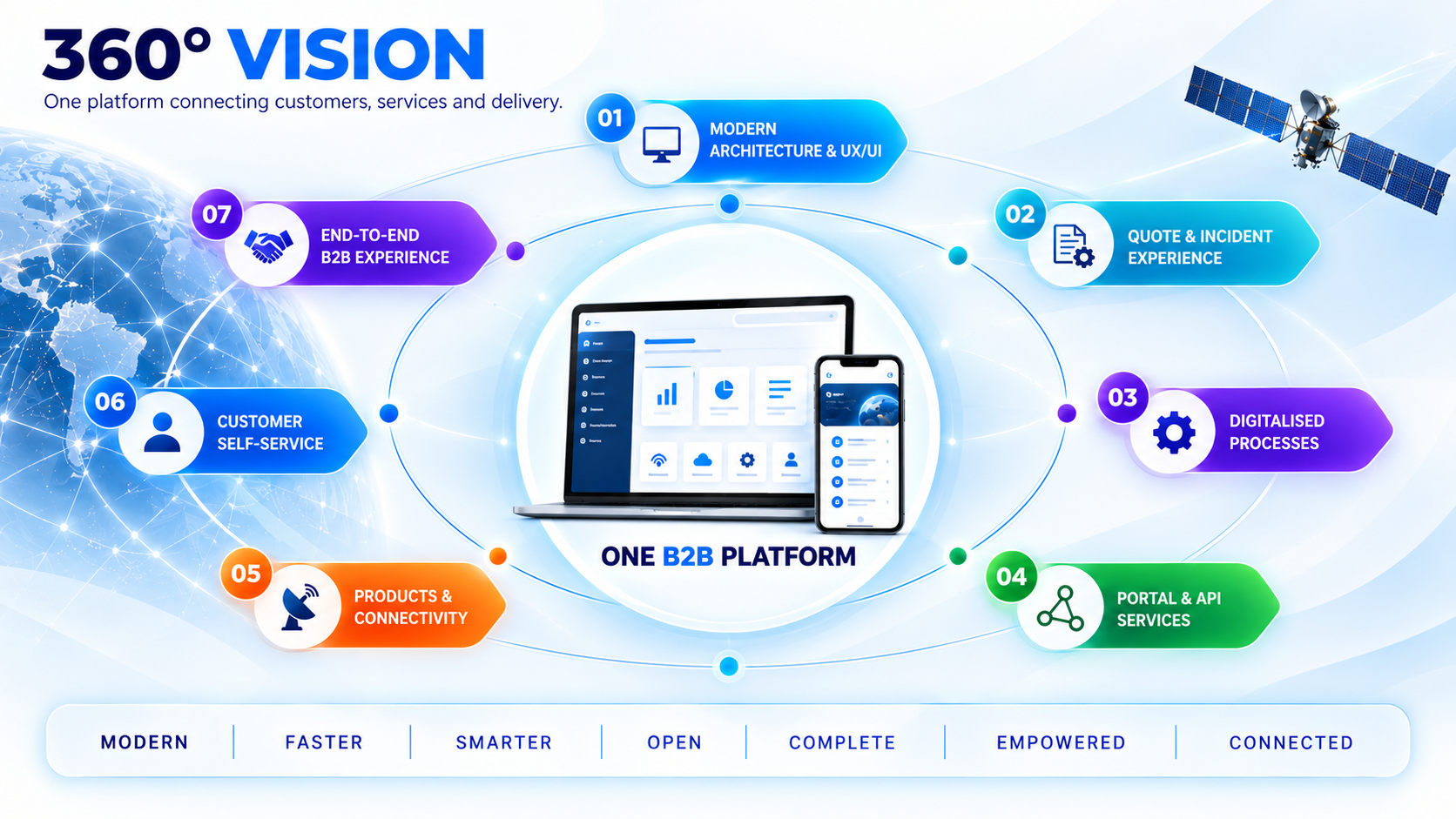
A stalled programme with accumulated complexity, weak continuity and no credible path to delivery.
Front-end and API delivery coordinated with CRM, IT architecture, Scrum, PMO leadership and three business teams.
Multi-portal, multi-country complexity consolidated into one web portal and taken through end-to-end delivery.
01 · Executive challenge
Recover delivery credibility withoutreducing the problem to a simple redesign.
The situation inherited
The previous refactoring effort had consumed two years without delivering the target outcome, followed by roughly one year on hold. Business availability was constrained, transparency with Italy was difficult, and delivery pressure remained high.
The programme also lacked several supporting roles normally used to absorb complexity. There was no dedicated BA or QA support in the working model, and I had to coordinate the delivery chain across product, engineering, CRM, architecture, UX/UI and business stakeholders.
Failed refactor→Fragmented multi-country delivery→Re-established E2E programme
Recovery objectiveOne accountable delivery system → one consolidated portal → controlled end-to-end execution
Restart a stalled initiative
Recover momentum and decision clarity after a failed two-year refactor and a prolonged hold.
Reduce portal fragmentation
Move from a multi-portal, multi-country landscape toward one coherent B2B web experience.
Create coordination where roles were missing
Connect business, front-end, APIs, CRM, architecture, UX/UI, Scrum and PMO leadership into one delivery cadence.
02 · Programme mandate
Authority had to be explicit.Execution had to be integrated.
The signed mandate established end-to-end accountability across programme recovery, product decisions, technical coordination and stakeholder delivery.
Mandate in practice
Own the recovery from problem framing to production delivery.
The role required programme direction, product ownership, delivery governance and cross-team orchestration rather than management of a single workstream.
Delivery principle
Reduce ambiguity at the interfaces: business ↔ product ↔ UX/UI ↔ front end ↔ APIs ↔ CRM ↔ architecture.
Single E2E ownership
Maintain responsibility across scope, sequencing, teams, dependencies and delivery decisions.
One portal direction
Replace fragmented portal logic with a consolidated product and delivery target.
Cross-system execution
Synchronize front-end, API, CRM and architecture decisions with business needs.
Recover momentum
Turn an inherited stalled initiative into an executable sequence with visible ownership and cadence.
03 · From stalled programme to delivery system
Clarify · Simplify · Align · Govern · Deliver.
The recovery model converts an inherited programme problem into a controlled sequence of product, technology and stakeholder decisions.
Clarify authority
Make E2E accountability explicit.
Simplify target
Converge on one portal direction.
Align delivery
Connect business and technology owners.
Govern dependencies
Coordinate API, CRM and architecture boundaries.
Drive execution
Make blockers, decisions and progress visible.
Deliver E2E
Move from stalled refactor to one delivered portal.
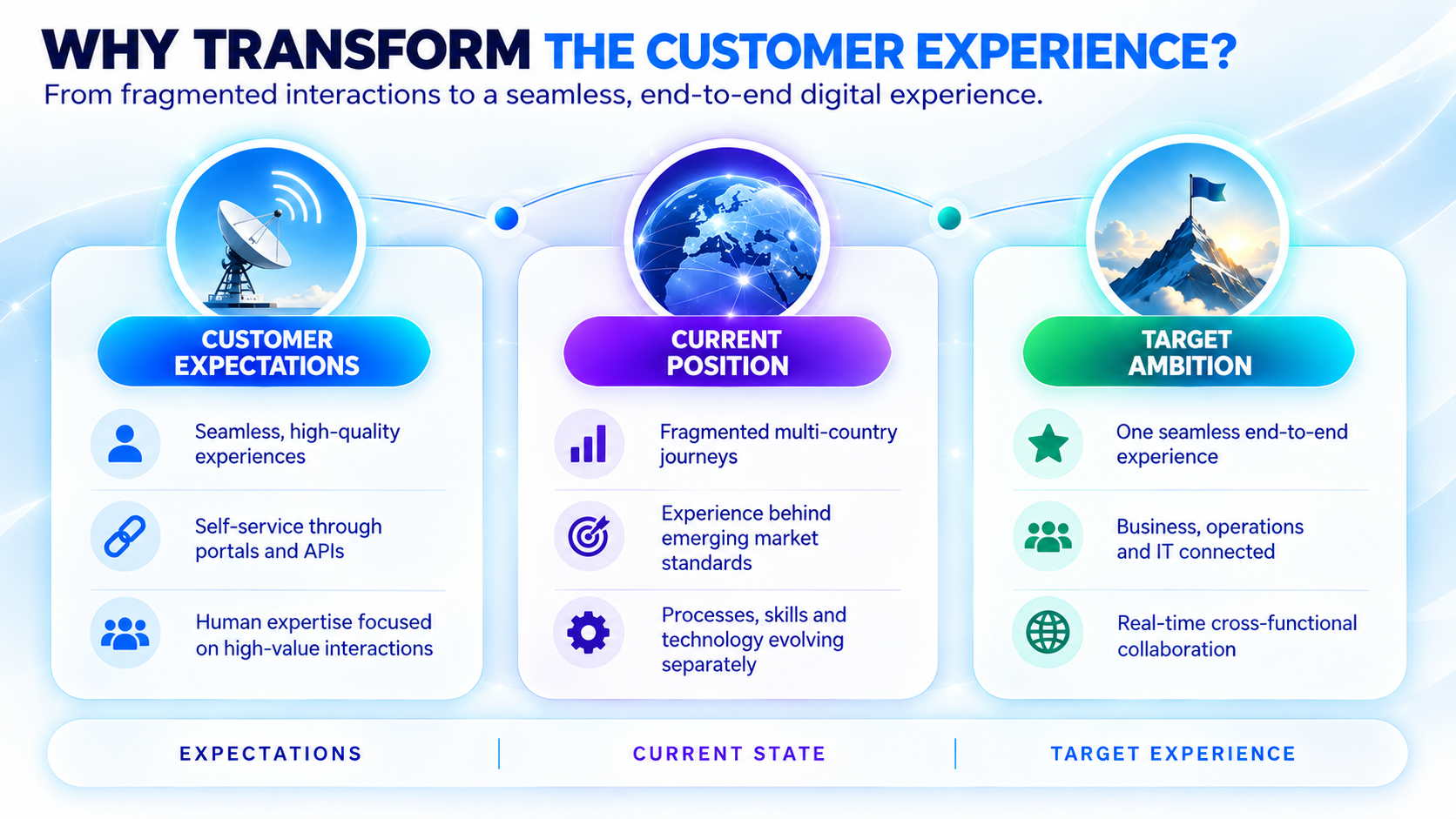
04 · Programme recovery engine
A controlled path from stalled scope to delivery.
The recovery depended on sequencing decisions across product scope, stakeholder alignment, technical interfaces and delivery governance rather than pushing more activity into the existing structure.
01 · Diagnose
Reconstruct the programme
Understand what had failed, what remained valid and where accountability had broken down.
02 · Mandate
Reset decision rights
Establish the practical E2E responsibility required to move decisions through the programme.
03 · Product
Consolidate the portal target
Replace multi-portal complexity with one coherent product direction.
04 · Business
Recover stakeholder input
Work around limited business availability while keeping requirements and decisions moving.
05 · Technology
Coordinate front end & APIs
Drive two IT delivery streams while managing integration dependencies.
06 · Systems
Align CRM & architecture
Synchronize portal decisions with CRM and enterprise architecture constraints.
07 · Experience
Integrate UX/UI
Keep user experience work connected to product, business and technical feasibility.
08 · Delivery
Close E2E
Manage dependencies, escalation and release progression through completion.
Recovery outcome · one accountable programmeProduct direction · cross-system coordination · visible dependencies · consolidated portal delivery.
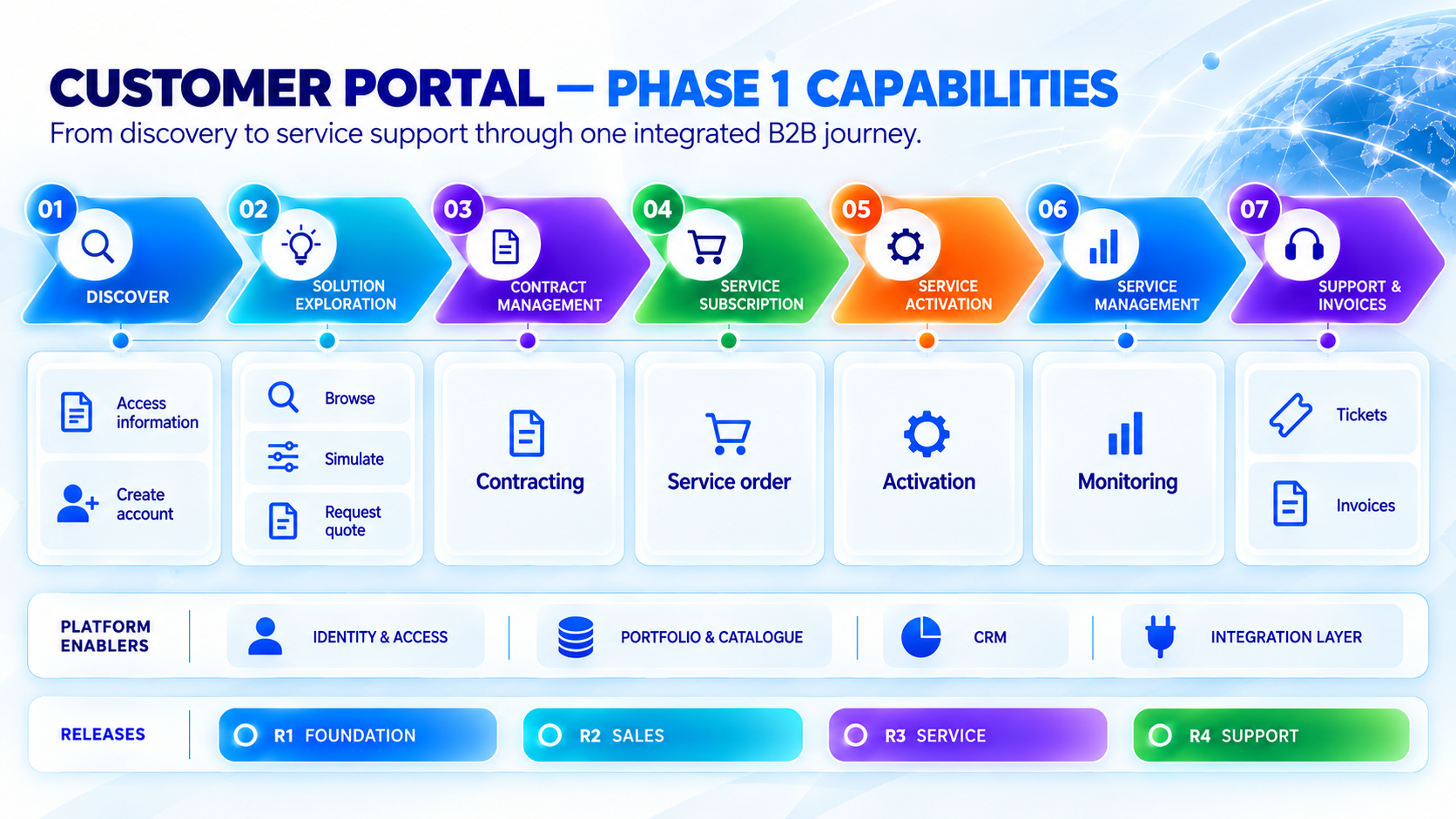
05 · Delivery operating model
Who decides. Who delivers.Where dependencies meet.
The operating model was built around practical coordination across business, product, engineering and enabling functions because the programme could not rely on a fully staffed delivery structure.
Scope gate
Business decision
Architecture gate
Integration gate
Release readiness
Production handover
Operating rule: unresolved ownership or interface decisions are programme risks, not local team problems. They must be surfaced, arbitrated and sequenced at E2E level.
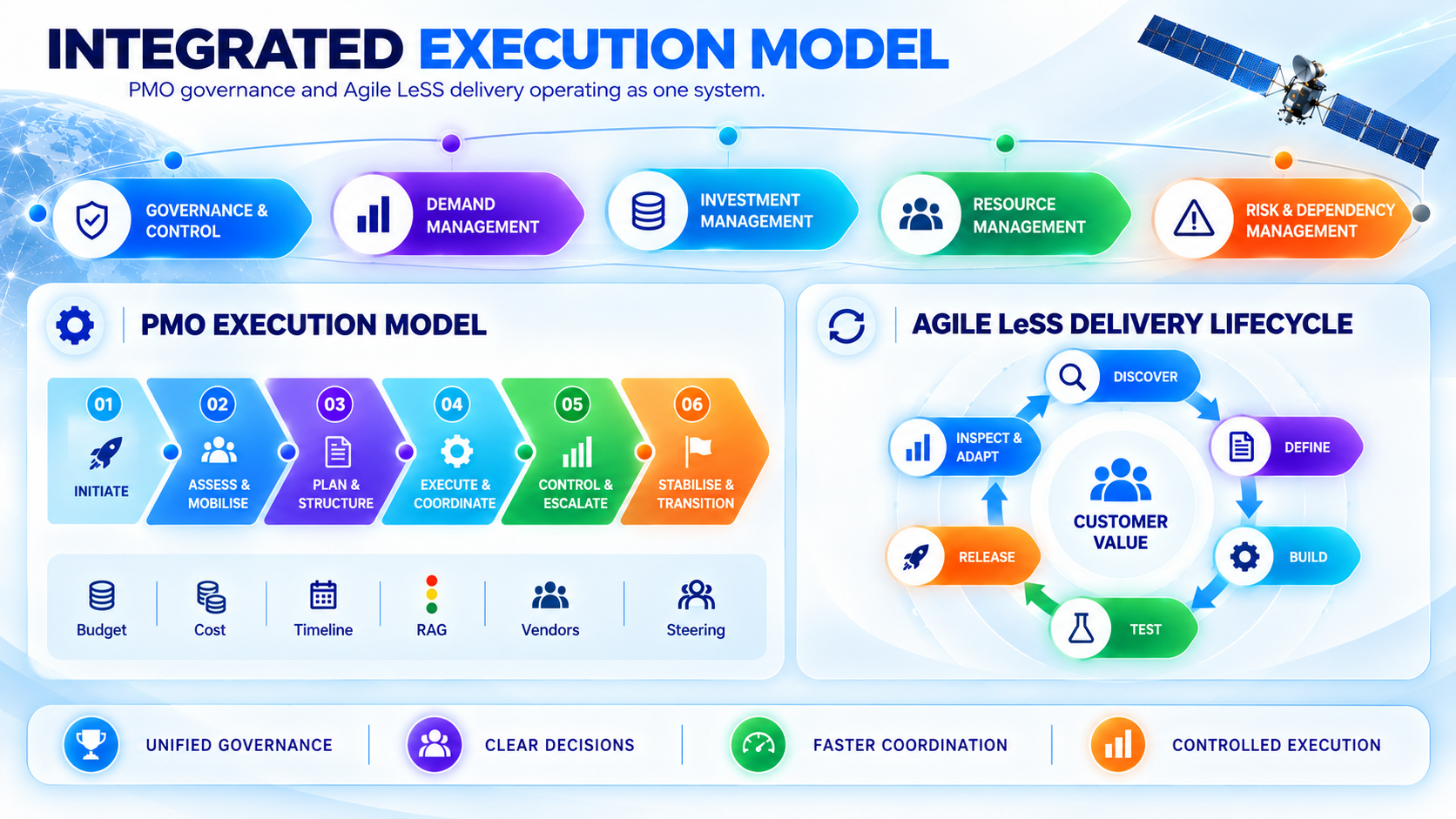
06 · Key executive & product decisions
What had to change to make delivery possible.
The decisive work was not additional project administration. It was changing the shape of the problem so teams could execute against a coherent target.
01
Reset the programme around E2E accountability
Treat fragmented workstreams as one programme with explicit ownership of cross-team decisions.
DecisionOne accountable delivery chain.
BoundaryDependencies cannot remain locally owned.
02
Consolidate multiple portals into one target
Reduce product and delivery fragmentation rather than continue extending the inherited portal landscape.
DecisionOne web portal direction.
BoundaryAvoid country-by-country duplication.
03
Coordinate business input without waiting for ideal availability
Keep decisions moving through structured engagement and escalation when stakeholder availability was constrained.
DecisionProtect delivery cadence.
BoundaryDo not let missing input become invisible delay.
04
Manage architecture as an interface problem
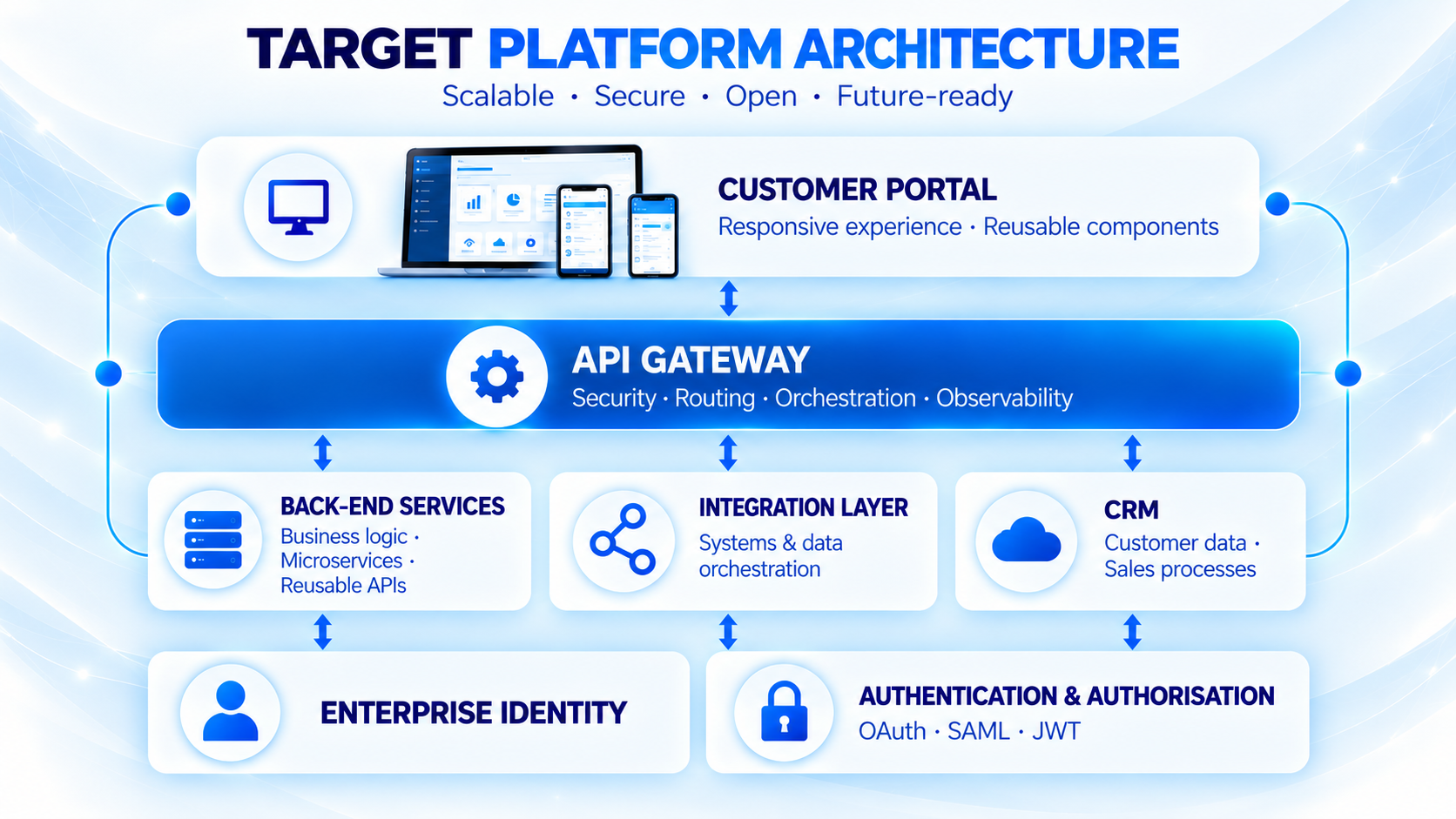
Coordinate portal, API, CRM and architecture dependencies as one system rather than separate technical streams.
DecisionIntegrate at programme level.
BoundaryNo isolated component optimisation.
05
Absorb missing delivery functions pragmatically
Compensate for gaps in BA, QA and PMO support without allowing ownership ambiguity to stop execution.
DecisionClose operating-model gaps.
BoundaryKeep responsibilities explicit.
06
Optimise for completion, not activity
Prioritise the decisions and dependencies required to get the consolidated portal through end-to-end delivery.
DecisionDelivery outcome over output volume.
BoundaryProgress must resolve programme risk.
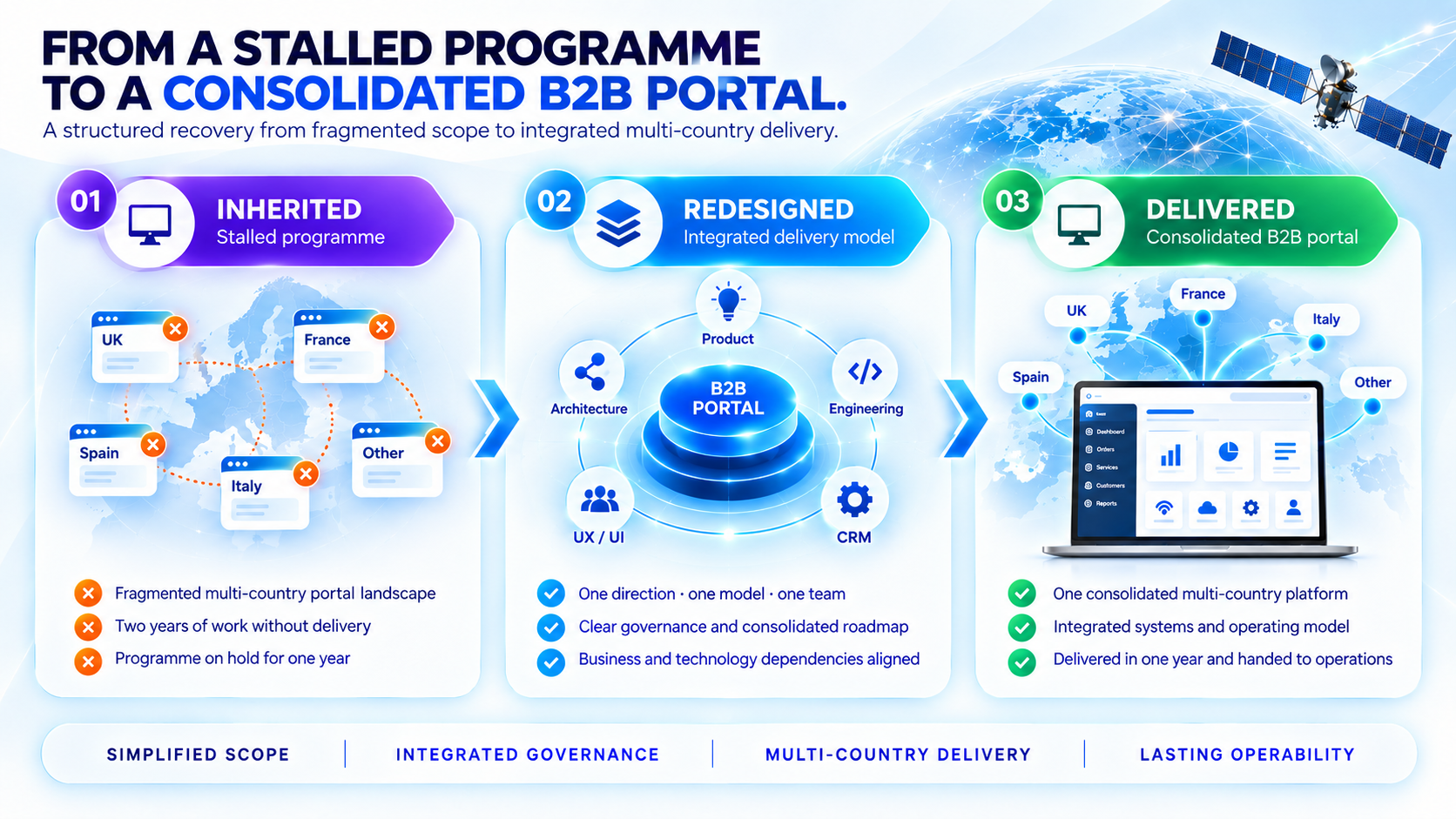
07 · Inherited vs redesigned vs delivered
Make the recovery trajectory explicit.
The case separates the inherited programme state, the delivery model introduced to recover it, and the resulting consolidated portal outcome.
Stalled refactoring programme
Previous effort had failed after two years and was subsequently put on hold.
- Multi-portal, multi-country complexity
- Limited business availability
- Difficult cross-country transparency
- Missing delivery support roles
- High pressure with unclear recovery path
Integrated E2E delivery model
Programme recovery centred on one target, explicit accountability and cross-system coordination.
- One consolidated portal direction
- Two IT teams coordinated E2E
- CRM and architecture dependencies integrated
- UX/UI connected to delivery
- Three business teams coordinated through one programme
Consolidated B2B portal
The refactoring programme was brought through end-to-end delivery in roughly one year.
- Multi-country portal consolidation
- Integrated front-end and API delivery
- CRM / architecture coordination
- Controlled stakeholder decisions
- End-to-end programme completion
Portfolio boundary: the case focuses on programme recovery, product decisions and delivery leadership. Confidential implementation details and customer-sensitive material are intentionally excluded.
08 · Evidence of execution
Proof behind the recovery narrative.
The portfolio version uses only evidence directly supported by the project history provided for this case. Commercial or customer-impact metrics are not asserted without supporting evidence.
✓
Signed project mandate
The formal mandate established E2E accountability across programme recovery, product direction, cross-team governance and delivery.
2→1
Failed programme recovered
A refactoring effort that had failed after two years and remained on hold for roughly one year was restarted under a new delivery model.
◎
Multi-team coordination
Two IT teams, CRM, IT architecture, Scrum, PMO leadership, UX/UI and three business teams were coordinated through the programme.
↗
~1-year E2E delivery
The consolidated multi-country portal was taken through end-to-end delivery in approximately one year.
Evidence rule: no revenue, adoption, ROI or customer-impact figure is published in this case unless supported by a document or explicitly confirmed source.
09 · Outcome & leadership value
What this case demonstrates.
EUTELSAT demonstrates the ability to recover a stalled digital programme, simplify a fragmented product landscape and coordinate business and technology stakeholders through to delivery.
A failed refactoring initiative converted into a deliverable programme.
The work moved from inherited fragmentation and stalled execution to one portal direction, one cross-functional delivery system and end-to-end completion.
Recovery begins when accountability, target state and interfaces become explicit.
Complex delivery problems are often coordination problems before they are technology problems.
The critical contribution was aligning mandate, product scope, business decisions, engineering streams, CRM, architecture and experience design around one executable path.
Clarify → Simplify → Align → Govern → Deliver.